
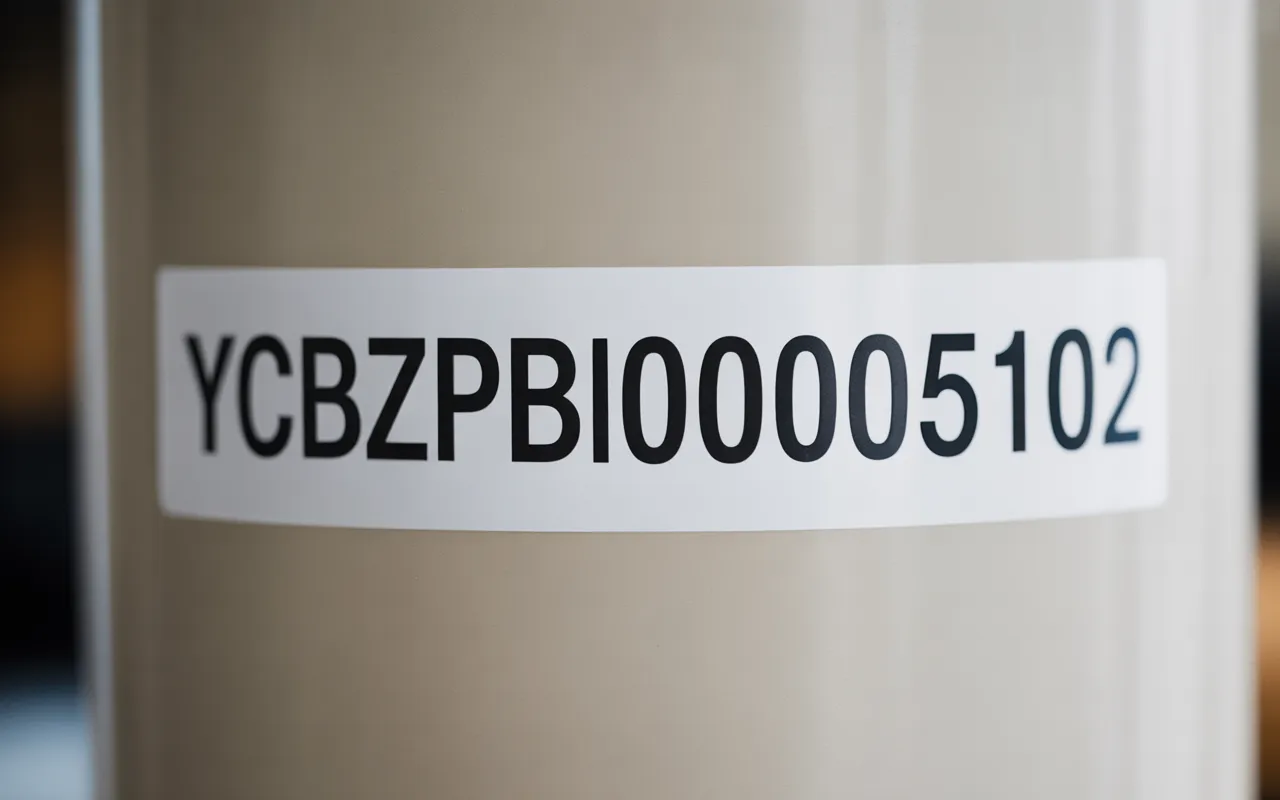
When you first come across the term ycbzpb00005102, it may look like a meaningless alphanumeric string. But in today’s digital world, strings like this often carry far more importance than their appearance suggests. They can represent product codes, dataset entries, encrypted identifiers, system logs, digital assets, or unique reference values embedded deep within organizational workflows. In this article, we’ll break down what a code like ycbzpb00005102 represents, how such identifiers function, why they matter, and how you can apply or interpret them across different technical and practical contexts.
Even though the exact origin of ycbzpb00005102 is not defined, treating it as a model example allows us to explore the broader ecosystem of digital identifiers. Think of it as a case study that helps us understand the structure, purpose, and relevance of similar identifiers in modern technology systems. Whether you’re working in data management, software development, logistics, analytics, or cybersecurity, this knowledge will inevitably come in handy.
So let’s unpack the structure and significance of ycbzpb00005102, and in doing so, build a practical understanding of how such identifiers fit into the technological frameworks of today.
1. What Exactly Is ycbzpb00005102?
At its core, ycbzpb00005102 behaves like what professionals call a “unique digital identifier.” These identifiers appear across all modern systems—from databases to inventory tools, from cloud platforms to cryptographic processes. They exist to represent something precisely and uniquely without the confusion of descriptive labels or ambiguous naming conventions. A well-structured identifier ensures that machines can track, categorize, retrieve, and process information accurately and efficiently.
In many systems, identifiers like ycbzpb00005102 are automatically generated. They usually combine letters and numbers to create a vast range of possible combinations. That enables large systems to avoid duplication, which is crucial when a database handles millions—or even billions—of entries. Human-readable names or labels could never offer the same level of scale, speed, and precision.
The main advantage of having such a structured yet abstract identifier is that it provides neutrality. It doesn’t reveal sensitive details about the item it relates to, and yet it acts as a stable reference point. Whether the code refers to a product, a record, a user, or a system pathway, the identifier itself remains consistent even if the associated characteristics change. This stability makes tracking and processing far more reliable in complex digital environments.
2. The Purpose and Role of Unique Identifiers in Modern Systems
Systems today are built on data. Every action, process, transaction, or event needs to be tracked. Identifiers such as ycbzpb00005102 become the “anchors” that hold all this information together. Without them, data would float around without proper connection, classification, or relational integrity.
For example, think about how online shopping works. Every product, no matter how small or trivial, has an internal code so the system can update inventory, confirm delivery, track returns, or add it to customer histories. A system couldn’t rely on names alone because names can be duplicated or changed. Unique identifiers solve this problem by functioning as permanent digital fingerprints.
In the realm of software development, such identifiers are equally critical. Source code management systems rely on commit IDs. Cloud platforms rely on resource identifiers. APIs rely on request and response tokens. These are all variations of identifiers just like ycbzpb00005102. Even most user accounts don’t really operate on usernames—behind the scenes, each account has a numeric or alphanumeric identifier to avoid confusion.
Without this backbone of identifiers, modern digital infrastructure would collapse into chaos. The order and reliability that make today’s worldwide systems function so smoothly are due, in part, to the simplicity and power of these unique codes.
3. Dissecting the Structure of ycbzpb00005102
While the structure of ycbzpb00005102 appears random at first glance, identifiers like these often follow internal logic—even if that logic isn’t obvious. Many systems generate unique IDs using predefined patterns that combine letters, numbers, timestamps, prefixes, or system-specific segments.
The “ycbzpb” portion, for example, might act as a prefix that identifies which system or category the identifier belongs to. Many corporate systems assign letter-based prefixes to indicate regions, departments, data types, or classification layers. While this specific prefix may be fictional for our example, the concept behind it is widely used in real-world operational structures.
The numeric portion “00005102” may represent a sequential value or a batch number. Zero-padded numbers are especially common because they maintain consistent length and sorting order. If this identifier were part of a larger dataset, the number might reflect the 5102nd entry in a database or a category. This helps systems keep identifiers clean, predictable, and scalable.
Understanding the internal logic of identifiers makes it easier to decode them, document them, and manage them—especially in large organizations that rely heavily on structured data flows.
4. How Identifiers Like ycbzpb00005102 Are Generated
Unique identifiers can be generated in many different ways, depending on the type of system and its requirements. For something like ycbzpb00005102, generation might involve a combination of automated rules and algorithmic processes.
One common method is sequential generation, where numbers simply increase one by one. This works well for small or tightly controlled systems, such as inventory logs or ticketing systems. Another method is hashing, where a piece of data—like a name, timestamp, or machine ID—is processed through an algorithm that outputs a stable alphanumeric code. Cryptographic hash functions are widely used for this purpose.
Another approach involves hybrid generation. Systems combine random letters, timestamp segments, and counter values to create identifiers that are both unique and difficult to reverse-engineer. Such systems strike a balance between structure and unpredictability, making them suitable for security-focused environments.
Understanding the generation process is helpful because it tells you how the code fits into the larger workflow and whether it can be predicted, decoded, or replicated.
5. Why ycbzpb00005102 Matters in Organizational Workflows
Even though the identifier itself seems small, its role can be massive. Imagine a logistics company attempting to track millions of packages simultaneously. If each package had a descriptive name instead of a code, confusion would be unavoidable. Identifiers like ycbzpb00005102 solve this by functioning as the backbone of record consistency.
In analytics workflows, identifiers allow systems to merge, compare, and update data without relying on fragile variables. For example, if a product changes its name, category, or description, the identifier remains untouched. Analysts rely on these stable points to ensure accuracy in forecasting, auditing, and historical record-keeping.
In cybersecurity, identifiers also play a vital role. System events, error logs, and access tokens all rely on such codes. A single code may allow an administrator to trace unauthorized access, identify vulnerabilities, or reconstruct a timeline of events.
Overall, identifiers maintain integrity across digital workflows—and without them, operational stability simply wouldn’t be possible.

6. Practical Use Cases Where ycbzpb00005102-Type Codes Appear
Although ycbzpb00005102 is hypothetical, similar identifiers appear in numerous practical applications. One major example is e-commerce inventory. Each item needs an internal SKU code, and these often look like our example because they’re generated automatically by the platform.
In the tech industry, database primary keys often resemble such identifiers. These keys serve as the foundation for joining tables, calling API endpoints, or linking user actions across multiple services. They allow systems to maintain consistency even in distributed environments spanning multiple servers and regions.
Manufacturing processes also use similar identifiers for batch tracking. Every batch of raw material or finished product needs to be traceable. If a quality issue arises, the identifier allows the company to isolate affected batches and ensure safety and compliance.
Even entertainment platforms, like streaming services, use identifiers for user sessions, device tokens, and content files. Much of modern convenience runs on these hidden strings.
7. How to Interpret or Document Codes Like ycbzpb00005102
Interpreting an identifier begins with understanding its structure and usage context. If you’re working within a system where such codes frequently appear, documentation becomes essential. Good documentation includes the meaning of prefixes, the numbering system, the generation method, and the relationships between identifiers and their associated entities.
For developers and analysts, documenting identifiers helps establish consistency across teams. When everyone understands how codes are generated and assigned, it becomes easier to troubleshoot issues or build automation around them.
For non-technical professionals, learning the basics of identifier structure helps avoid mistakes such as mislabeling, duplication, or improper deletion. Even small errors can break large systems if they affect identifiers tied to critical data.
Ultimately, interpreting a code like ycbzpb00005102 isn’t just about understanding one identifier—it’s about understanding the framework behind it.
8. Common Mistakes People Make When Handling Digital Identifiers
One of the biggest mistakes is altering the identifiers manually. Many people assume they can rename or “clean up” identifiers to make them more readable. But modifying an identifier breaks the link between the object and its data, often causing system-wide errors.
Another common issue is reusing identifiers. Every identifier must remain unique. If someone reassigns an existing identifier to a new object or record, it creates confusion and corrupts data integrity. This often results in duplicated relationships or misprocessed transactions.
A third mistake is poor storage practices. Some people attempt to store identifiers in spreadsheets without ensuring encoding or formatting is preserved. Leading zeros, capitalization, or hidden characters can be lost, which changes the identifier’s meaning. Proper handling means preserving the exact string format at all times.
Being aware of these pitfalls helps maintain a reliable workflow around identifier management.
9. Why Consistency and Formatting Matter
Identifiers like ycbzpb00005102 operate under strict formatting rules. A single missing zero or a single mis-typed letter can destroy the identifier’s meaning completely. This is why systematic consistency is crucial.
In databases, formatting rules ensure identifiers can be indexed, sorted, and matched accurately. Even the smallest formatting inconsistency disrupts this. In logistics, formatting ensures scanning systems read labels correctly. In software, formatting ensures scripts and automated systems can parse identifiers without errors.
Uniform formatting is also critical for long-term archive management. If an organization needs to retrieve decades-old records, identifiers must remain intact, unchanged, and legible. Formatting consistency ensures that even as systems evolve, reference values remain stable.
10. The Future of Unique Identifiers and Where ycbzpb00005102 Fits In
As technology continues to grow, the need for scalable and secure identifiers will expand. Systems will handle more data, more connections, and more automation than ever before. Identifiers like ycbzpb00005102 demonstrate the type of compact, reliable, and machine-friendly structures required for this future.
We will likely see more integration with blockchain-style hashing, distributed identifiers, and multi-source encoding. These will increase both the security and uniqueness of identifiers as systems grow more interconnected and complex.
Even as technology evolves, the core purpose of identifiers remains unchanged: representing information accurately and uniquely. Whether the future introduces smarter identifiers or more complex formats, the principle that underlies ycbzpb00005102 will remain essential to all digital architecture.
Conclusion
At first glance, ycbzpb00005102 might look like a random jumble of characters. But identifiers like this are the silent heroes powering modern digital systems. They maintain order, consistency, and precision behind the scenes, enabling everything from online shopping and software development to analytics, logistics, and cybersecurity.
Understanding how such identifiers are structured, generated, and managed helps you appreciate the deeper logic of digital infrastructure. Whether you’re a developer, analyst, writer, business owner, or simply someone curious about technology, recognizing the significance of identifiers like ycbzpb00005102 gives you a clearer picture of how today’s data-driven world truly operates.